Solar window film and blinds solve overlapping problems in different ways. Film stays on the glass and provides a fixed level of solar control. Blinds or shades let occupants change the coverage as light and room use change.
For a Toronto office, restaurant or showroom, start with the complaint: afternoon heat, glare on a display, loss of daylight or exposed interiors after dark. The right specification may include film, an adjustable covering, or both.
Solar film versus blinds: a practical comparison
| Decision | Solar window film | Blinds or shades |
|---|---|---|
| Control during the day | Fixed performance after installation | Coverage can change as occupants adjust it |
| Glare at a workstation | Depends on the selected film and shade | Can be adjusted for the affected screen or time of day |
| Outward view | Retained with transparent solar film; tint and reflection can change | Depends on fabric, slat position and how far the covering is closed |
| Night-time visual privacy | Reflective screening is not dependable when indoors is brighter | A suitable closed covering can screen the room; fabric and edge gaps matter |
| Appearance | Changes the glass itself | Adds an interior furnishing visible around or through the glass |
| Before specifying | Review glass compatibility and film samples | Review mounting, coverage, operating access and sample material |
This is a functional comparison, not a ranking of energy performance. Blind materials and installation details vary. A dark film and a closed shade can also make a room too dim when direct sun disappears.
Start with the affected hours and sightlines
Ask people using the space when the problem begins and ends. Photograph the affected window and workstation during that period. Record whether the concern is direct sunlight, screen reflections or a generally warm room.
For restaurant seating, check the tables during service. For a showroom, look at the display from the sidewalk as well as from inside. For a shared amenity room, include both daytime use and evening events.
Those observations help distinguish a persistent solar-load issue from a short period that needs adjustable shading. They also reveal when a view or visible display is too important to cover.
Compare daylight, heat rejection and glare separately
Visible light transmission, or VLT, describes how much visible light passes through the tested film-and-glass combination. Total solar energy rejection, or TSER, describes solar-energy rejection. Neither figure alone tells you whether someone can comfortably use a screen.
XPEL's nominal figures on 3 mm glass illustrate the trade-off:
| Film | Visible light transmission | Total solar energy rejection | Glare reduction |
|---|---|---|---|
| Clear View Plus 70 | 72% | 55% | 20% |
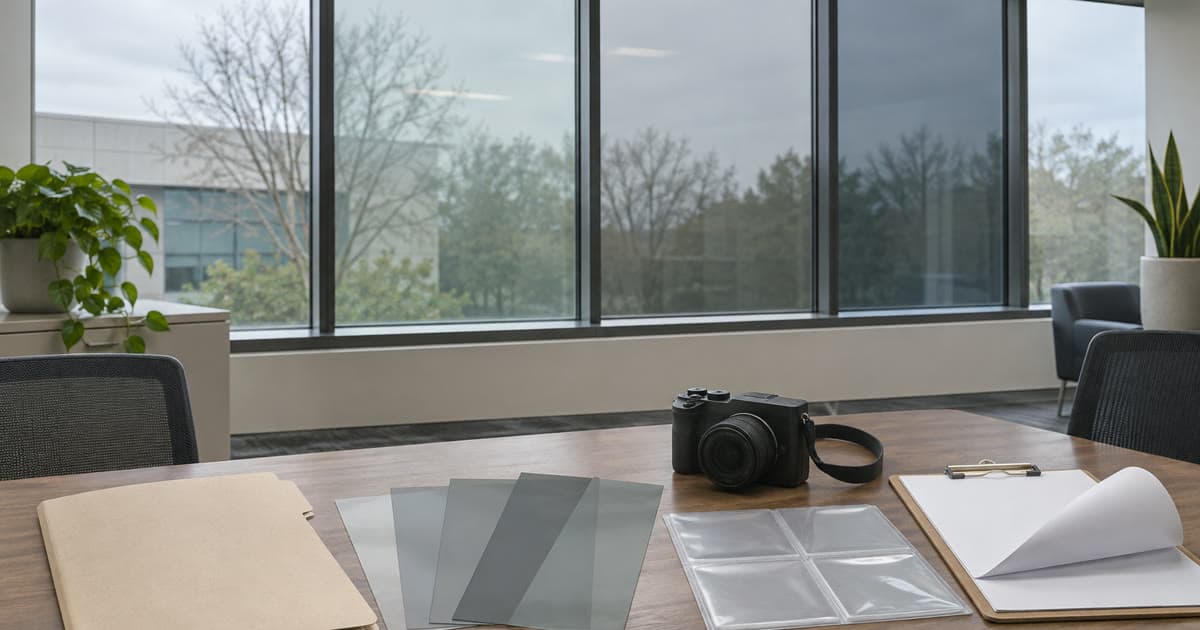
| Clear View Plus 40 | 40% | 62% | 53% |
| Clear View Plus 20 | 21% | 67% | 77% |
Source: XPEL VISION performance sheet R0326V3. These are nominal comparisons on the stated glass, not predicted results for your building.
Plus 70 admits more visible light than the darker options in this table, but it also lists less glare reduction. A clear-view choice therefore needs a screen check. A darker choice needs an acceptable daylight and appearance review.
Use the interactive solar-film comparison to filter by minimum VLT and compare heat rejection or glare. Then review the detailed VLT guide before choosing samples.
Request a commercial solar-film quote. Send the property location, affected rooms and the hours when heat or glare becomes a problem.
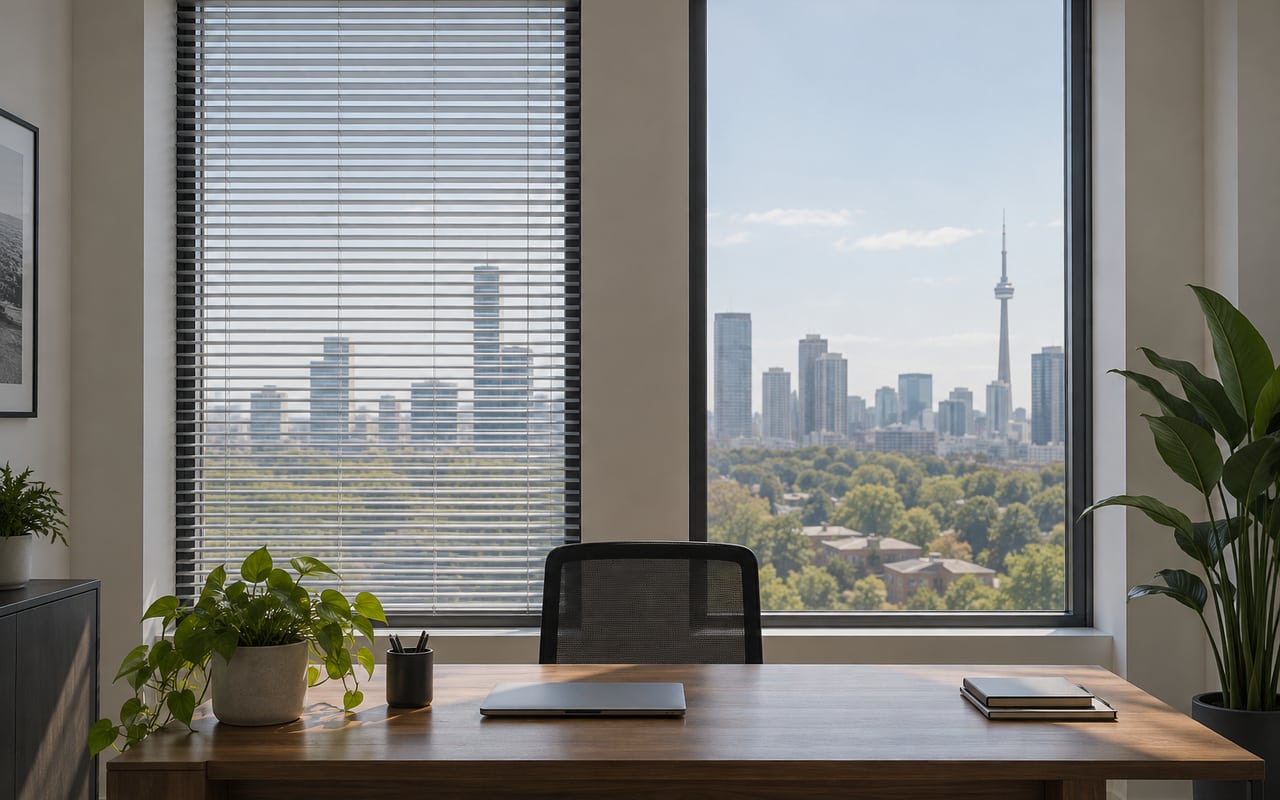
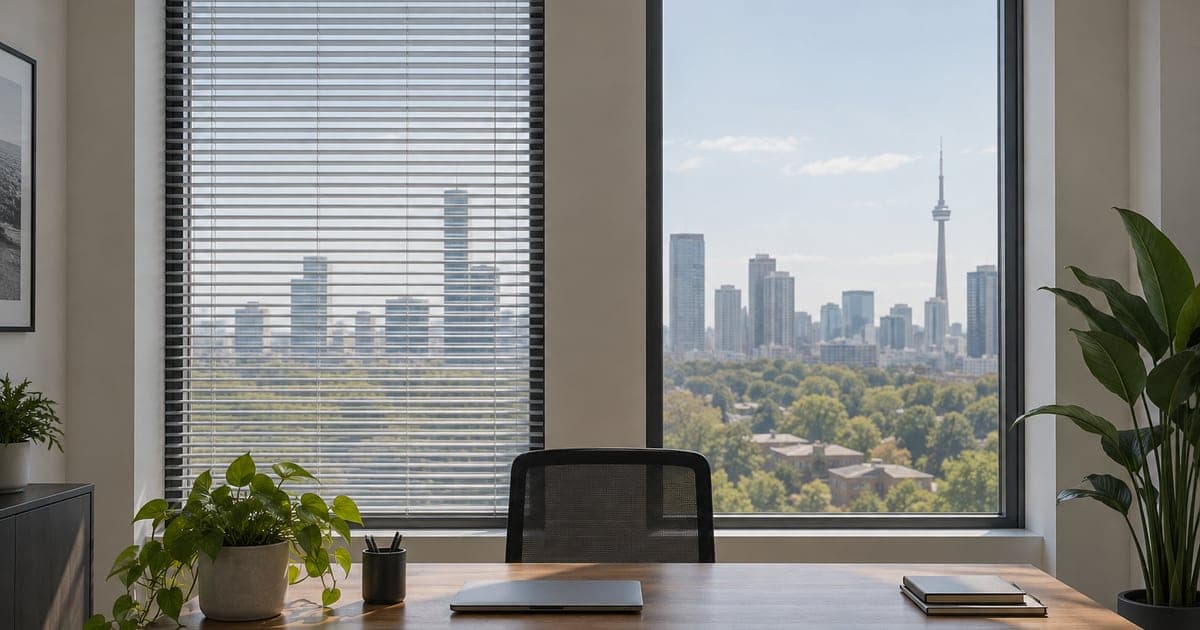
Illustrative image.
When film and blinds can work together
A room may benefit from fixed solar control during ordinary use and a separate covering for presentations or privacy. Keep the requirements distinct: the film addresses the selected solar performance; the covering handles the occasions when the view needs to close.
Check how the proposed covering sits relative to the glass and whether it creates installation or operating constraints. Tell the film installer about existing blinds and any planned changes before approval.
Do not assume a showroom that looks private on a bright afternoon stays private after closing. Reflective screening depends on the relative brightness inside and outside. XPEL describes that limitation in its decorative-film guidance. For occupied rooms after dark, review privacy film and night-time sightlines.
Assess energy results for the whole building
A TSER percentage is not a utility-bill savings percentage. The building's glazing, orientation, HVAC system, schedules and climate all affect energy use. Reducing incoming solar energy can also remove useful warmth in winter.
The US General Services Administration's solar-control-film evaluation recommends climate-specific, whole-building modelling. Its findings should not be treated as a guaranteed outcome for a Southern Ontario property. Read the GSA evaluation.
Use the window film savings calculator only with transparent project assumptions. Include potential added heating costs and distinguish comfort goals from financial projections. Film does not fix failed seals, deficient ventilation or every source of overheating.
Agree on samples and a written scope
Identify the proposed film, affected panes and available glass specifications. Double-pane and Low-E descriptions alone do not establish compatibility. Require a check against the manufacturer's film-to-glass requirements for the proposed installation.
Review the sample during the complaint period and when direct sun is absent. Record who approves exterior appearance, tenant access and the final selection. If blinds remain part of the solution, include them in the sample review.
Request a solar-film assessment and written quote. Clear Guard qualifies commercial enquiries before scheduling a site visit across Southern Ontario.
Frequently asked questions
Can solar film replace every blind in an office?
Not automatically. Film has fixed performance and cannot close for presentations or night-time privacy. Review those requirements before removing existing coverings.
Is darker film always better for a hot room?
No. Compare measured solar rejection, glare reduction and light transmission together. Check the actual room and glazing; the darkest option may sacrifice more daylight than the space can accept.
Should I compare solar film and blinds by price alone?
Compare the required outcome and complete installation scope first. They provide different controls. A useful proposal identifies the film, coverage, compatibility review, samples and any separate shading still required.
Related reading
Commercial solar film · Office heat and glare · Commercial quote checklist · Commercial window film services
Build and download a room-by-room film checklist to record the priorities and glazing questions for your project.