Patio Door Security: The Most Common Entry Point for GTA Break-Ins
Patio sliders are a fixture in most GTA homes built after the 1960s. They bring light into the living space, open onto backyards, and feel like an easy part of the architecture. They are also one of the fastest forced-entry points on a residential property. This post explains why, and what you can do about it without replacing the entire door.
Why Patio Sliders Are Vulnerable
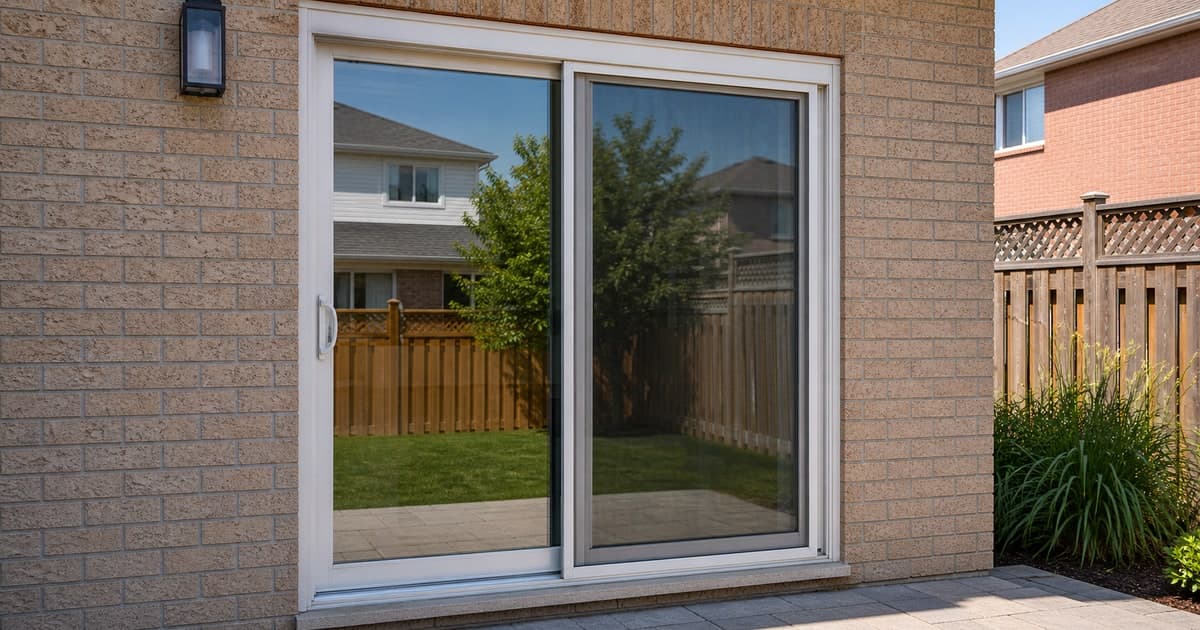
Standard patio sliders are vulnerable for three reasons: the glass is thin, the frame is not deeply anchored, and the latch is minimal resistance. Together, these three factors create a forced-entry problem that is measured in seconds.
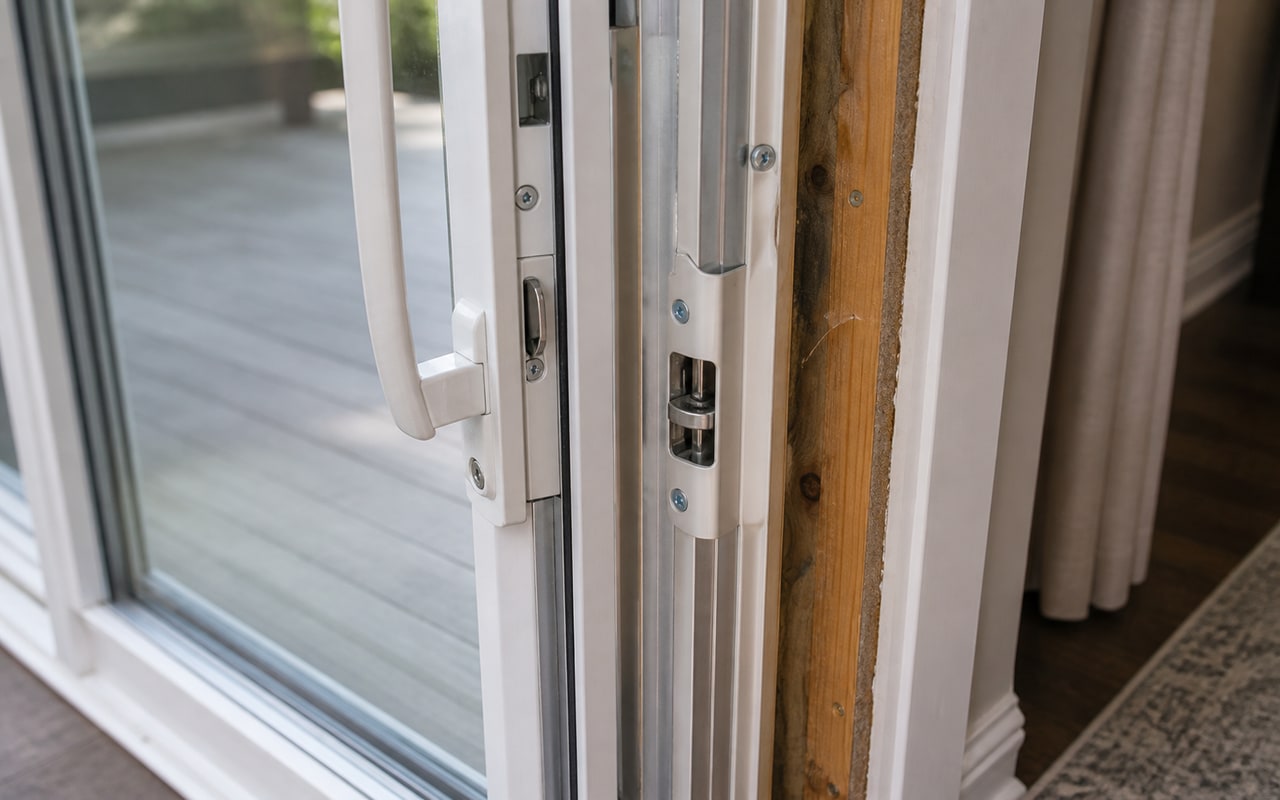
The slider's glass panes sit in an aluminium or vinyl track. The latch is typically a handle-activated cam lock that engages the opposing frame. On an unprotected slider, this latch is the only mechanical barrier between an intruder and the interior of the home.
The frame itself is mounted to the rough opening with fasteners spaced 16 to 24 inches apart. This spacing is adequate for normal use—hinges, weather, wind, foot traffic—but under a concentrated kick or shoulder strike near the latch side, the frame can shift in the opening rather than stay fixed.
Visibility compounds the vulnerability. A patio slider typically faces a rear yard. Rear yards are often shielded from street view and neighbour oversight. That privacy is valuable for the people who live there—it is also valuable to an intruder attempting to work undisturbed.
The Frame Failure Mode Under Force
When an intruder applies sudden force to the latch side of a patio slider, the frame does not usually fail at the latch itself. Instead, the frame separates from the structural studs around it. The fasteners stretch or pull through the material. The track lifts out of its mounting. The frame shifts laterally in the rough opening.
This is different from a hinged door, where the hinges remain pinned to the frame and the strike remains engaged. A sliding door's frame is only as strong as its fasteners, and fasteners spaced 16 to 24 inches apart are spaced for normal service, not forced-entry resistance.
Once the frame shifts even an inch or two, the glass pane loses the compression that keeps it seated in the track. The gap is enough for a hand to reach through, disengage the latch, or unlock the opposing pane.
How Glass Breaks and Why Timing Matters
Standard patio glass—single-pane or older double-pane—breaks on impact. A strike from a fist, a kick, or a thrown object shatters the pane. The fragments clear from the frame, leaving an open space.
Once the glass is gone, the path to the latch is clear. An intruder can reach through the frame and disengage the latch or unlock the opposing sliding pane in 5 to 10 seconds.
Security film changes this equation. When security window film is applied to both panes, the film holds the fragments together when the glass breaks. The pane cracks, but it does not collapse into the frame. Reach-through is not possible. The intruder must spend additional time defeating the film itself—peeling, cutting, or abrading it away.
This additional time is the entire function of security film on a patio slider. It does not prevent break-in. It buys delay.
GTA-Specific Risk Factors
Certain GTA properties face elevated risk from patio-slider intrusion. Homes backing onto trails or ravines have no rear-yard visibility. Waterfront properties have extended rear isolation. Properties accessed by laneways or shared pathways have approaching routes that are less visible to neighbours.
Post-war suburban homes—the 1960s-to-1980s construction that dominates much of the GTA—often have rear-yard additions or extensions with patio sliders that face green space, water, or trails. These homes combine two vulnerabilities: exposure from rear-yard access and the architectural pattern of minimal frame anchoring.
Seasonal vacancy also matters. Some GTA residents own cottage properties or have extended absences. A visibly unoccupied home with a patio slider is a known target.
None of these factors makes a break-in inevitable. But they shift the risk profile. If your property matches one of these patterns, prioritizing patio-slider security makes sense.
Hardening Options Without Door Replacement
You do not have to replace your patio slider to reduce forced-entry risk. Here are the main options:
Security Window Film
Apply security film to both glass panes. The film is nearly invisible after installation. On impact, it holds the fragments together, preventing reach-through and forcing an intruder to spend additional time peeling, cutting, or abrading the film away.
Advantages: Cost-effective first step. No structural modifications. Invisible after installation. Works in conjunction with other measures.
Disadvantages: Glass still breaks on impact. Does not prevent impact strikes. Requires manual defeat.
Best for: Most GTA homes as an initial hardening measure, especially on sliders facing private yards or trails.
Frame Reinforcement and Shim Bracing
Secure the sliding-door frame more firmly into the rough opening by adding supplementary fasteners or structural shims behind the frame. This reduces frame-shift vulnerability and strengthens the mounting against lateral force.
Advantages: Addresses the frame-failure mode directly. Works with all other measures.
Disadvantages: Requires professional installation. More disruptive than film alone.
Best for: Sliders on homes where rear-yard isolation or seasonal vacancy is a concern.
Supplementary Locks and Hardware
Add a secondary keyed lock to the non-sliding pane, or install a sliding-door pin lock that prevents the slider from moving. These do not prevent forced entry but add friction and noise.
Advantages: Inexpensive. Easy to install. Creates a secondary barrier and audible resistance.
Disadvantages: Not sufficient alone. Supplementary only. Do not prevent impact-driven glass failure.
Best for: Secondary friction measure, paired with film or frame reinforcement.
Supplementary Barriers
Security bars or fixed security gates prevent forced access completely. However, security bars create emergency-egress concerns for homes with sleeping families. They are better suited to commercial properties or high-risk residential applications.
Advantages: Most resistant to forced entry if properly anchored.
Disadvantages: Creates life-safety issues. Expensive. Not recommended for homes with occupied sleeping families.
Best for: Commercial applications or very high-risk residential scenarios with proper emergency-egress planning.
Track Security Devices
Some devices fill or block the slider track to prevent sliding. These are effective but make normal operation impossible without removal. Limited application for occupied homes.
Implementation Checklist for Typical GTA Homes
If you are starting from zero, here is a practical sequence:
- Install security film on both panes — this is your primary delay measure and works on sliders of any age.
- Add supplementary keyed locks or pin locks — secondary friction at minimal cost.
- Inspect and reinforce frame mounting if needed — assess whether the frame is loose and shim or re-fasten if it is.
- Evaluate exterior lighting of the patio area — motion-activated lighting adds detection and deterrent value.
- Consider a security-rated slider replacement if budget and risk profile warrant it — this addresses all vulnerabilities at once but is a larger investment.
This sequence prioritizes cost-effectiveness and builds from lowest-cost measures to larger structural changes.
A Clear Guard technician can walk the property with you and tell you exactly what the vulnerability looks like. We evaluate your slider's frame condition, glass type, and latch, then recommend the combination that makes sense for your home. Assessments are free and take about 30 minutes.
Frequently Asked Questions
Why are patio sliders a common break-in entry point?
Standard patio sliders have minimal frame anchoring and rely on a simple latch. Glass breaks on impact, clearing the path to the latch instantly. The combination makes entry quick and easy compared to other forced-entry points.
Can I secure my patio slider without replacing it?
Yes. Security film, supplementary locks, and frame reinforcement all address different vulnerabilities without requiring a new door. A layered approach is typically more cost-effective than replacement.
What is the most effective way to harden a patio slider?
Combine security film (which holds glass together) with supplementary locks or frame reinforcement (which resists forced opening). Film alone is a good first step. Film plus frame reinforcement plus secondary locks is a more robust solution.
Ready to Harden Your Patio Slider?
A Clear Guard technician will evaluate your specific door, frame condition, and glass, and recommend the combination that makes sense for your home. Assessments are free. Book one today and find out exactly what your slider's vulnerability looks like.