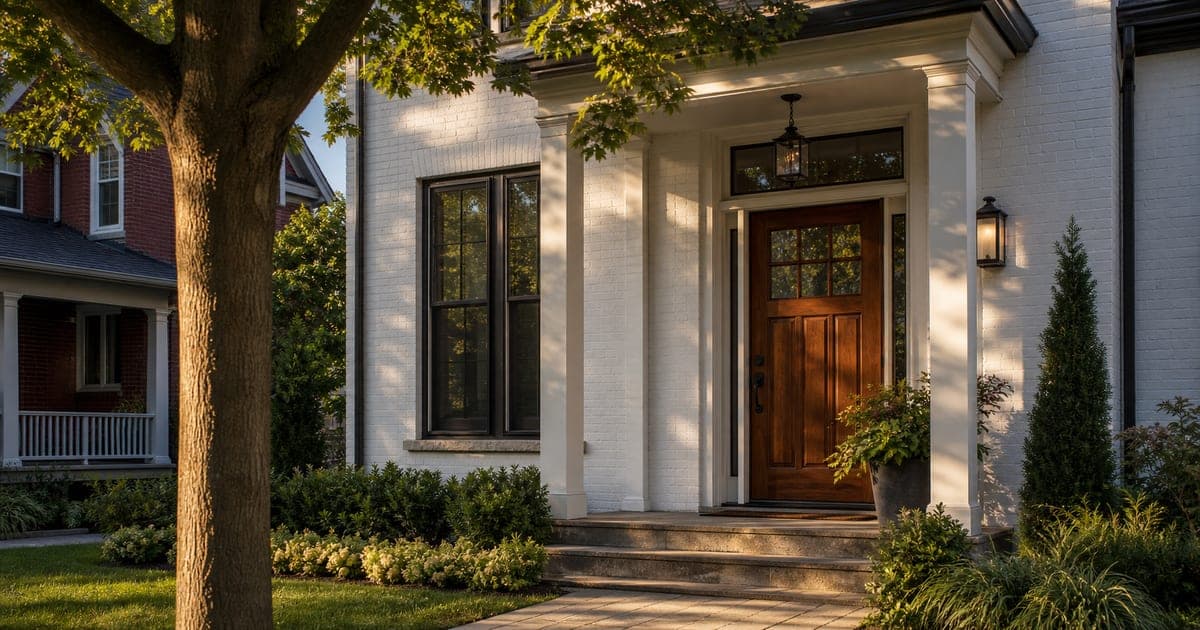
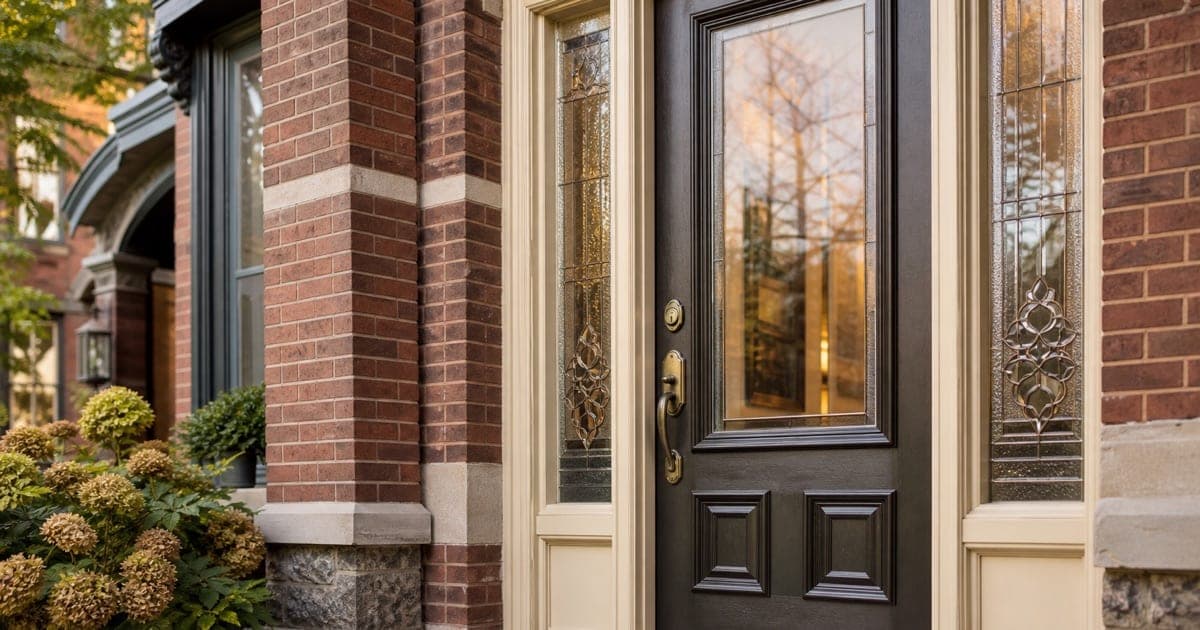
If you own a Victorian or Edwardian home in Toronto — in Cabbagetown, Rosedale, The Annex, Riverdale, Leslieville — you have sidelight glass beside your front door. The narrow vertical glass panels beside the lock have been there since the 1880s or 1920s. They brought natural light into homes without large street-facing windows.
They also present a different security geometry than modern homes. Most heritage homeowners upgrade the deadbolt. Few think about the glass two feet to the left of it.
This post is about that geometry, what it means, and what takes 30 minutes to address.
What Sidelight Glass Is and Why Heritage Homes Have It
Sidelights are narrow vertical glass panes set into the door frame or sideframe immediately beside a front door. In Victorian and Edwardian residential architecture, they were a design convention: they brought natural light into the deep interior of homes without large windows facing the street.
Heritage Toronto neighbourhoods — Cabbagetown, The Annex, Rosedale, Riverdale, Leslieville, Lytton Park, Forest Hill Village, Summerhill — have block after block of intact sidelight assemblies from the 1880s–1920s.
Original sidelights: typically single-pane glass, thin (3mm–4mm), set in wood glazing bars or leaded came channels. This is not structural glass. It is not rated for impact. It was chosen for light transmission, not durability.
Some homeowners have replaced original sidelights with double-pane or safety-glazed units during renovations. If your home has been updated, look for a manufacturer's stamp on the glass or a spacer bar at the edge (which indicates double-pane). The type of glass matters for the risk assessment below.
Why Sidelight Glass Is Often the Primary Entry Point — Not the Deadbolt
Here is the core geometry:
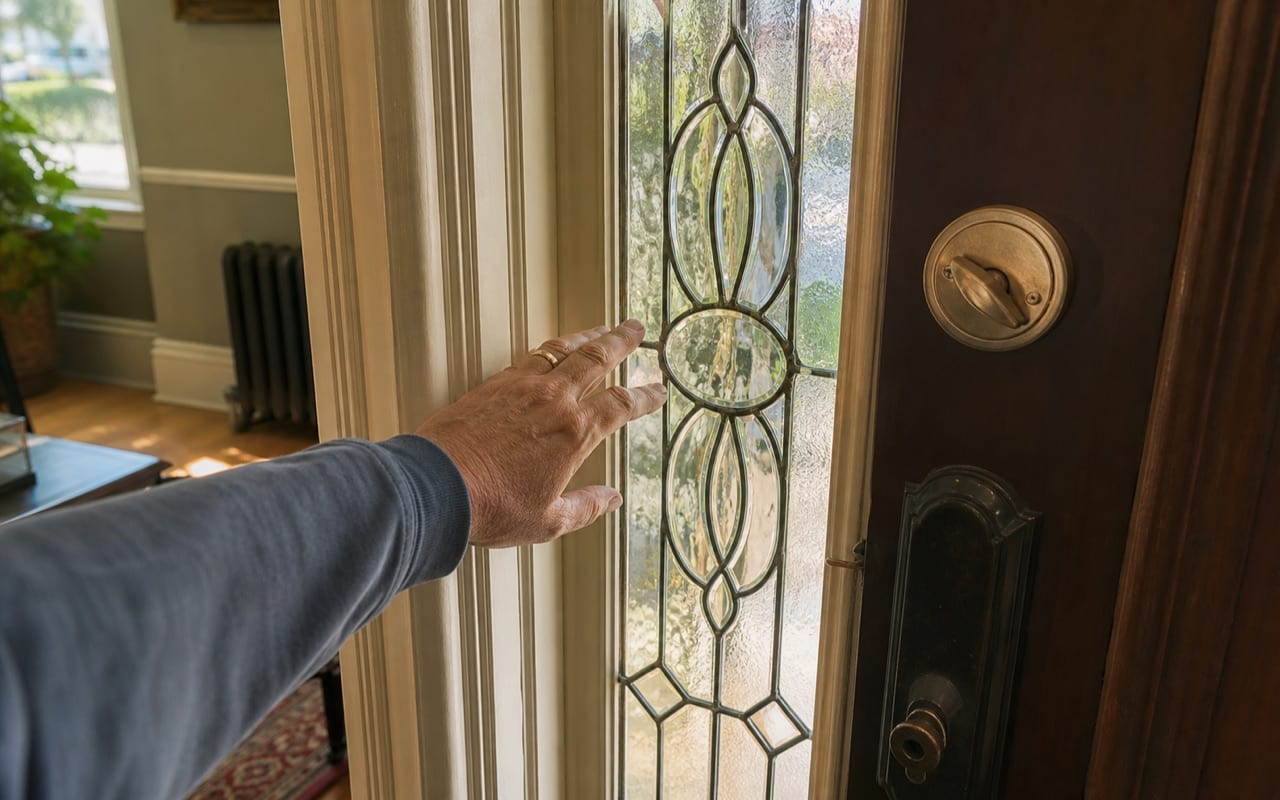
In most heritage entries, the sidelight panel is within arm's reach of the interior deadbolt or lever handle. A single sharp strike breaks the glass. An arm reaches through. The interior deadbolt knob (the thumb turn) is turned. The door opens.
This bypasses the lock entirely. The strength of the deadbolt is irrelevant when the glass beside it can be accessed.
You may have upgraded your deadbolt to a heavy-duty model. That deadbolt is only part of the entry assembly. If the lock hardware is within arm's reach of broken glass, the lock's strength does not protect the home.
Some homeowners consider replacing the deadbolt with a key-cylinder-both-sides model to eliminate the thumb turn. This creates a fire egress problem and is generally not recommended — it can trap occupants if keys are misplaced during an emergency. The better solution addresses the glass.
Original Single-Pane vs. Later Double-Pane Glass
Original single-pane sidelight glass is typically 3mm–4mm, with no interlayer. It breaks cleanly on impact and offers no meaningful resistance to a deliberate strike.
Later replacement double-pane units are thicker, and occasionally tempered or laminated depending on when and where they were installed. They may offer marginally more resistance than original glass, but standard insulated glass units (IGUs) without a security interlayer are not rated for forced entry.
Leaded or decorative glass — the came channels (lead strips between panes) provide no structural benefit. The individual glass pieces within a leaded pattern are smaller and thinner than a plain pane. In some cases, they are easier to punch through individually.
How to assess what you have: Look for a manufacturer's stamp on the glass corner. Check for a spacer bar at the edge (indicates double-pane). Or consult the original renovation permit if your home has been updated.
What Security Window Film Does to This Geometry
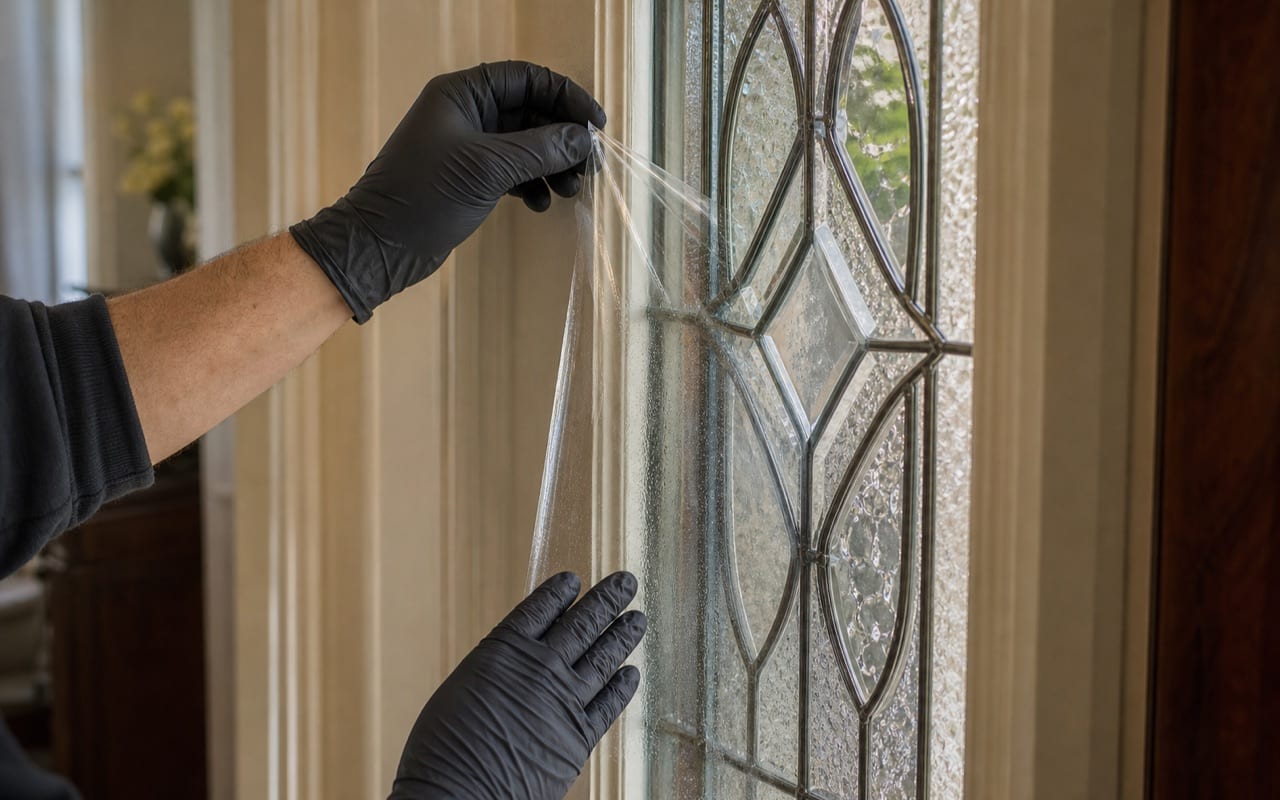
Security window film is a thick polyester laminate bonded to the interior glass surface.
On impact, the film holds the shattered fragments together. The glass breaks, but does not fall away. It crazes and remains bonded to the frame.
In the sidelight context, this matters specifically because the reach-through is only possible if the broken glass clears the opening. Film-held glass closes that gap.
Clear Guard’s primary specification combines 14 mil interior security film with 7 mil exterior security film on the same pane. Most clients receive both after the sidelight glass and frame are assessed.
A 12 mil frosted matte interior security film is available when privacy suits the doorway. An 8 mil interior option is used selectively rather than as the default.
The film does not make the glass unbreakable. It changes what happens after it breaks. The pane becomes a held, fragmented barrier rather than an open hole.
This adds meaningful delay — it "buys time," "resists the reach-through," "adds meaningful resistance." It is not a guarantee against entry.
Does Film Affect the Visual Character of Leaded or Decorative Glass?
This is the heritage homeowner's primary concern, and it deserves a direct answer.
Optically clear security film has no visible tint, no texture, and no observable effect on the appearance of plain glass viewed from the exterior. From outside looking in, you will not see the film.
On leaded or stained glass: Film is applied to the interior surface. The exterior appearance of the leading pattern and any coloured or textured panes is completely unchanged. From the street, the sidelight looks exactly as it did before.
From the interior: The film is invisible in normal light. There is no haze or distortion on clear glass. Coloured panes retain their colour and transmission.
Heritage note: Film does not require removing or disturbing the original glazing. It bonds to the existing surface. No permits are required for this type of film application in Ontario (though you may want to confirm with your local heritage office if the property is individually designated).
Honest caveat: On antique ripple glass or very uneven historical panes, adhesion quality varies. A technician inspects the surface before committing to installation.
The answer: In the large majority of cases, film is visually undetectable on sidelight glass — from either side.
Complementary: ARX Guard on the Door Frame
Once the sidelight is addressed with film, the door frame is often the next consideration. Original heritage door frames are not designed to withstand a kick or shoulder charge at the lock point.
ARX Guard door fortification reinforces the door frame by anchoring it into the structural studs. An upper component attaches to the frame above the door (the header), and a lower component attaches below the door (the threshold). A hockey-stick mechanism with a latch ties the entire door into the frame.
Door fortification and film are complementary, not redundant. Film hardens the glass; fortification hardens the frame and lock point. Both layers matter.
Free Assessment on a Heritage Entry
Clear Guard works across Toronto's heritage neighbourhoods — Cabbagetown, The Annex, Rosedale, Riverdale, and Leslieville among them. If you are not sure whether your sidelight glass is filmed or rated for impact, a Clear Guard technician can tell you in a single visit. Assessments are free and take about 30 minutes.
A technician will look at:
- Sidelight pane type and condition
- Distance from glass to interior lock hardware
- Frame integrity (original wood frames may have glazing compound failures that need addressing before film)
- Whether the door frame itself would benefit from fortification
Written quote within 48 hours. No obligation to proceed.
Book a free on-site assessment. A technician will examine your sidelight assembly and give you a written quote. No obligation.
FAQ
What is sidelight glass on a heritage front door?
Sidelights are narrow vertical glass panes beside the front door, common in Victorian and Edwardian homes (1880s–1920s). Originally designed to bring natural light into homes without large street-facing windows, they are a defining architectural feature of Toronto's heritage neighbourhoods.
Is the glass beside my front door a security risk?
The proximity of the glass to the interior lock hardware is what matters. If the sidelight is within arm's reach of your deadbolt thumb turn, the geometry allows someone to break the glass, reach through, and turn the lock without forcing the door. Film addresses this by holding the broken glass and closing that gap.
Will window film change the look of my heritage leaded glass?
No. Optically clear film applied to the interior surface leaves the exterior appearance unchanged. The leading pattern, colours, and textures remain exactly as they are. The film is invisible from both inside and outside in normal light conditions. A technician will inspect your specific glass before installation.
Ready for an assessment? Book a free on-site evaluation of your sidelight and door frame.